
What You Actually Need to Start a Short-Let Business in Nigeria
The property, the capital, the running costs, and the 5% consumption tax that catches new operators in their second year. A practical starting guide with real figures.
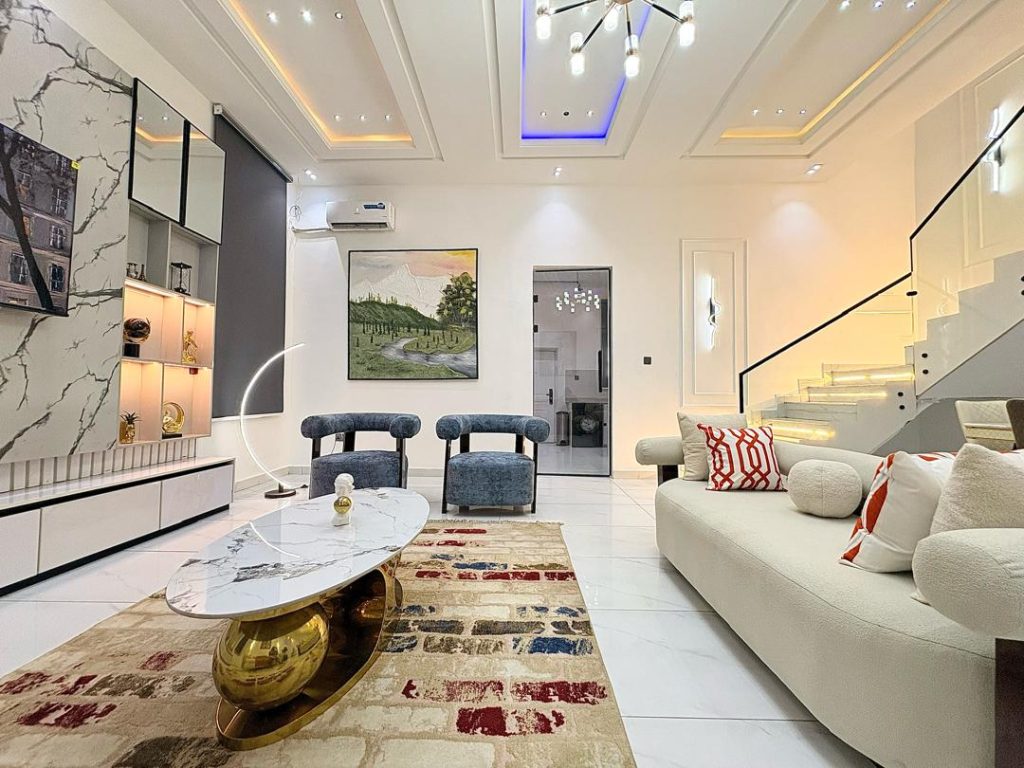
What You Actually Need to Start a Short-Let Business in Nigeria
Most people come to short-lets through a single number. They see an apartment in Lekki advertised at one hundred and eighty thousand naira a night, multiply it by thirty, and the answer looks like a salary. The business is real and it does work, but almost nothing about that multiplication survives contact with an actual calendar, a diesel bill, or the Lagos State Internal Revenue Service.
This is what you actually need, in the order you need it. The first half is for anyone still deciding whether to do this at all. The second half is for anyone who already has a property and needs to get it running properly.
First, whether the math works at all
Where you buy or lease sets your ceiling before you make a single other decision. A well-run apartment in Festac cannot out-earn a mediocre one in Ikoyi, because the market caps what either can charge.
But the nightly rate is the least useful number in the business. Three others matter far more.
Occupancy. Operators speaking to Nairametrics put a working benchmark at roughly ten booked nights a month per unit. Not thirty. If your plan only works at twenty-five nights, you do not have a plan.
Revenue against rent. The target Moyosore Badejo of Deity Homes describes is two to three times the annual rent in revenue across a year. That is the ratio to test your specific apartment against before you sign anything.
Time to recover capital. Temidayo Oloyede of Edala Development puts realistic capital recovery for a professionally managed apartment in a proper location at about eight years. If someone is selling you a two-year payback, ask what they are leaving out.
Run those three against a real apartment at a real price before you fall in love with a nightly rate.
The property, and three ways to get one
Buy it
Highest capital, full control, and you keep the asset appreciation which in Lagos has often outrun the rental yield. This is a property investment with a short-let business attached, and it should be judged that way.
Lease it and sublet short-term
Much lower entry cost. You pay a year or two of rent upfront and convert it to nightly income. The margin is thinner and the risk sits squarely with you: a bad year still owes the landlord. Critically, you need written permission to sublet on a short-term basis. Doing it quietly is how people lose both the apartment and the deposit.
Manage someone else’s
Almost no capital. You take a percentage to run listings, guests, cleaning and maintenance for an owner who wants the income without the work. It is the cheapest way to learn the operational side before you risk your own money, and the skills transfer directly.
What the fit-out actually costs
Furnishing is the number people underestimate, and power is the number they forget entirely.
The running costs are just as important and rarely mentioned in the pitch. The same operator puts public electricity at around twenty thousand naira a day and diesel reliance at up to thirty thousand naira a day. Take the higher figure across a month and you are looking at close to nine hundred thousand naira in power alone, whether or not anyone is staying.
That single fact reshapes the business. Your empty nights are not neutral, they are expensive. It is also why the inverter line in the chart above, large as it looks, can pay for itself: it is capital spent to stop a daily bleed.
Budget separately for cleaning between stays, laundry, water, internet, service charge, security, restocking consumables, and a maintenance float for the month the air conditioner dies in December.
Registering the business
Register with the Corporate Affairs Commission. A business name is the cheaper and faster route. A limited company costs more and carries more filing obligations, but it separates your personal assets from the business, which matters in a business where strangers sleep in a property you are responsible for.
If you are leasing to sublet, get the sublet permission in writing in the lease itself, not as a side conversation. If you are in a serviced estate, check the estate rules before you commit, because a growing number of Lagos estates now restrict or ban short-lets outright, and residents’ associations enforce it.
The tax almost nobody mentions
This is the part that catches new operators, and it is not obscure. It is a law from 2009.
Lagos State charges a 5% Hotel Occupancy and Restaurant Consumption Tax, and short-let apartments are named explicitly in the law alongside hotels, guest houses and motels. It is a consumption tax, which means it is charged to your guest on the bill and you collect and remit it. It is not a tax on your profit, so it applies whether or not you made any.
The practical consequence is that your pricing needs to account for it from day one. Operators who discover this in year two, having never charged it, face a back-dated liability on every night they ever sold.
| Obligation | When | Who to |
|---|---|---|
| Business registration | Before you start trading | Corporate Affairs Commission |
| Consumption tax registration | Within 30 days of commencing operations | Lagos State Internal Revenue Service |
| Consumption tax return and remittance | Monthly, by the 20th | Lagos State Internal Revenue Service |
| Annual returns | Yearly | Corporate Affairs Commission |
One important caveat: the consumption tax above is Lagos State law. If you are operating in Abuja, Port Harcourt or anywhere else, the state or FCT rules differ and you need to check what applies where your property actually sits.
Income tax, and what changed in January
Nigeria’s tax reform took effect on 1 January 2026, and it is genuinely good news for a small operator.
Under the new regime a company that qualifies as a small company pays 0% companies income tax, is exempt from capital gains tax, and is exempt from the development levy. The asset test is fixed assets of ₦250 million or less.
The turnover threshold is where it gets untidy, and it is worth knowing why sources disagree. Section 202 of the Nigeria Tax Act says ₦50 million. Section 147 of the Nigeria Tax Administration Act says ₦100 million. Taiwo Oyedele, who chairs the presidential fiscal policy and tax reforms committee, has stated that ₦100 million is the correct figure and the ₦50 million in the Tax Act is an error.
For a host with one or two apartments this is academic. You are far below either number, and your income tax position is likely to be the least of your compliance worries. The consumption tax is the one with teeth, because it is owed per booking rather than per profit.
VAT is a separate question from the small company exemption and the answer depends on your structure and turnover. That one is worth twenty minutes with an accountant rather than twenty minutes on a blog.
The operational setup
This is where the business is actually won or lost, and none of it is expensive.
A cleaner you trust, on call. Same-day turnarounds are the constraint on your calendar. A cleaner who cannot come on a Sunday costs you Sunday bookings.
A check-in process that works at 1am. Flights land late and Lagos traffic is Lagos traffic. Whether it is a lockbox, a smart lock, or a person, it needs to work without you.
Power and water you have actually tested. Know your generator run time, who supplies diesel at short notice, and what happens when the borehole pump fails.
An inventory list with photographs. Taken at handover, updated when you replace things. This is what settles a damage dispute.
Listings that reflect the apartment honestly. We covered the research on this in detail: what the research says about listing photos and bookings. Lead with a wide living-area shot, and make sure a guest standing in the doorway recognises the place.
A cancellation policy you chose deliberately. It decides what a booking is actually worth to you. Our guide to choosing the right cancellation policy walks through the trade-offs, and the Host Cancellation Policy sets out what happens if you are the one who has to cancel.
A realistic first year
Expect the first three months to be slow. You have no reviews, and reviews are what convert browsers into bookings. Price slightly under the market to buy your first ten reviews, then move your rate up once you have them.
Expect December to carry a disproportionate share of your year. Lagos short-let demand concentrates hard in the festive season, and rates rise by half or more. Plan your maintenance, your restocking and your availability around that, because a unit that is offline in December has lost more than a unit offline in February.
Expect to be more involved than you were told. The phrase passive income does a lot of damage in this market. It becomes closer to passive once you have a cleaner, a handyman, a check-in process and a manager, and each of those is a person you have to find, pay and keep.
If you want the cheapest possible education, manage someone else’s apartment for six months first. You will learn what breaks, what guests complain about, and what the calendar really looks like, and you will learn it without a lease in your name.
Sources
Market and cost figures: From Lekki to Ikeja: The hidden math behind Lagos shortlet pricing, Nairametrics, 5 May 2026.
Consumption tax: Understanding the Hotel Occupancy and Restaurant Consumption Tax Law of Lagos State, on the HORC Tax Law of 22 June 2009.
Tax reform: The Nigerian Tax Reform Acts, PwC Nigeria; From VAT to income tax: how Nigeria’s new tax rules affect you, Africa Check; and Nigeria Tax Act contradicts NTAA on turnover cap for small business, TheCable.


Pingback: LibraX at Hotel Expo Nigeria 2026 | LibraX