
Hotel, Serviced Apartment or Short-Let: What to Book in Lagos This December
Last December, Lagos travellers revolted against short-let pricing and booked hotels instead. Here is what each of the three actually costs you, and how to pick the right one for your trip.
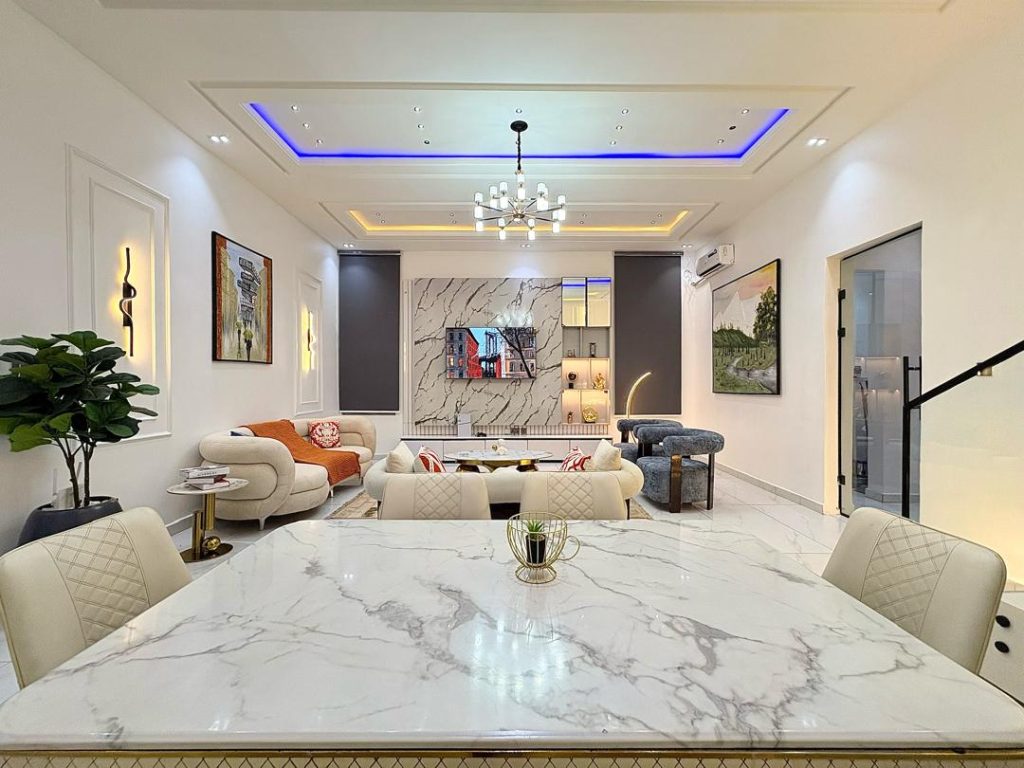
Hotel, Serviced Apartment or Short-Let: What to Book in Lagos This December
Most people planning a Lagos December start by picking a short-let. It is the default assumption now, the way booking a hotel used to be. Then they open the listings, see the December rate, and have to think again.
That thinking-again happened at scale last year, publicly and in real time, and it is worth understanding before you book anything for this one. There are three kinds of stay available to you in Lagos, they behave very differently in December, and the cheapest one depends almost entirely on how many people you are travelling with.
What happened last December
In early December 2025, Nigerian social media turned on short-let pricing. Vanguard reported the backlash as it happened, and the examples people were posting were not subtle.
The BBNaija alumna Nina posted a listing at ₦700,000 a night, with the comment “THIS IS RIDICULOUS. Some places have the nerve to charge 700k per night.” Leo DaSilva posted that “nothing is funnier than the prices of VI and Ikoyi apartments this December”, attaching a quote of $9,350 for eleven nights. For context, the average short-let nightly rate the previous year had been around ₦120,000.
The lifestyle creator Sisi Yemmie put the conclusion plainly: “Their greed is too much. I’ve gone to book hotel jejely.”
She was not alone, and the reasons people gave were consistent. Hotels often include breakfast. There are no cleaning fees or service charges bolted on at checkout. The booking process is simpler and the thing you are promised is more standardised. One user asked, reasonably, why anyone would prefer a short-let at those prices.
It is worth being precise about what this was. It was not a verdict on short-lets as a category. It was a reaction to specific operators pricing a single month as though it had to carry the year, which is the same behaviour we warned hosts against in pricing your short-let for Detty December. The estate agent Jennifer Ike described the aftermath bluntly: the short-let market was slow, not dead.
What the market actually did
The advisory firm MO Africa measured the 2024 festive season, from 19 November to 26 December. Hotels took over 15,000 reservations worth ₦54bn. Short-lets took nearly 6,000 bookings worth ₦21bn.
The interesting part is the arithmetic. Divide those out and a hotel reservation was worth roughly ₦3.6m while a short-let booking was worth roughly ₦3.5m. Per booking they were almost identical. Hotels simply did two and a half times as many.
So the choice is not really about which is cheaper in the abstract. Both ends of the market serve people spending similar money. The choice is about what that money buys you, and that depends on your trip.
The case for a hotel
A hotel is the right answer more often than Lagos travellers assume, and almost always right in three situations: you are travelling alone or as a couple, you will barely be in the room, and you want somebody at a desk at two in the morning.
What you are buying is predictability. The room will be what the chain says it is. Power and water are the hotel’s problem, not a question you have to ask. Housekeeping is daily rather than something you negotiate. Breakfast is often included, which quietly removes a cost and a decision from every morning. And if something breaks, there is a front desk rather than a WhatsApp message to a host who may be at a party.
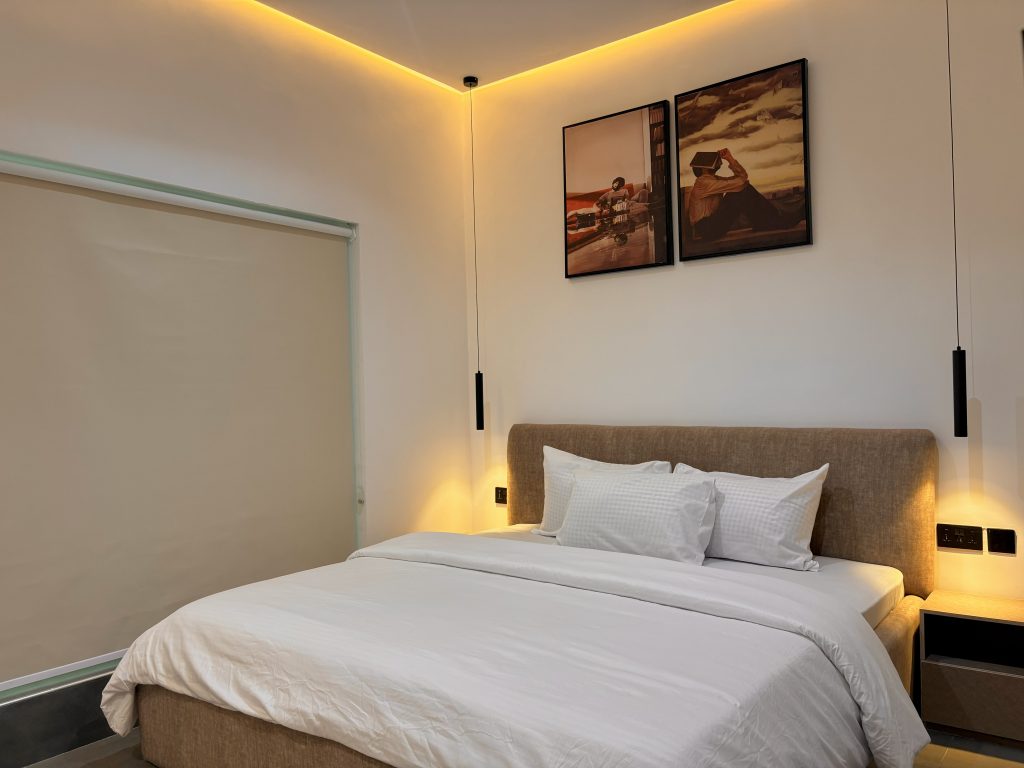
What you give up is space and a kitchen. For one or two people that rarely matters. For six it matters enormously, which is the whole point.
The case for a short-let
The short-let case is almost entirely a group case, and the numbers are decisive once you run them per person.
Reporting on last December put a shared three-bedroom across a group at roughly ₦500,000 to ₦800,000 for ten nights. Split four or six ways that is a fraction of what the same people would pay for separate hotel rooms over the same period. A solo luxury unit in Victoria Island or Ikoyi over ten nights, by contrast, ran ₦2m to ₦4.5m and above, which is precisely the pricing that triggered the backlash.
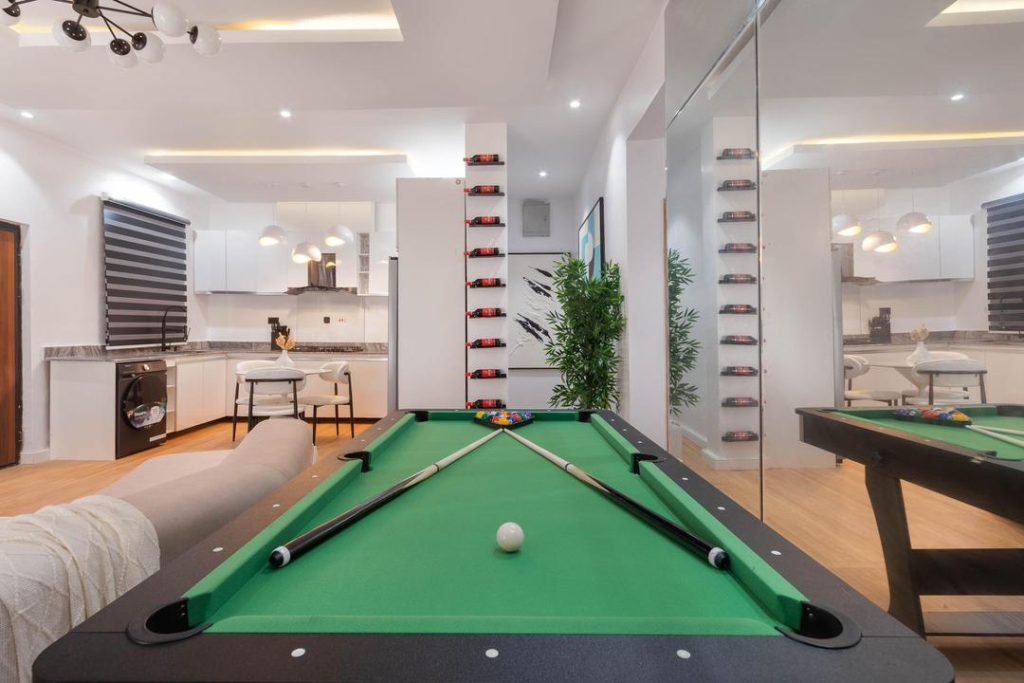
The short-let also gives you things a hotel structurally cannot. A kitchen, which matters more than people expect on a two week stay, both for cost and for not eating out every night. A living room where ten people can actually sit, which is the real reason groups book them. Laundry. Space to spread out.
The things to go in with your eyes open about are the extras and the variability. Cleaning and service charges can be added at checkout. Standards swing widely between one apartment and the next in the same building. And power is a question you must ask explicitly, because it is the single most common source of December complaints.
The case for a serviced apartment
The option most people skip is the one that often fits best, and it is the middle of the three rather than a compromise between them.
A serviced apartment is an apartment with hotel services attached. You get the space, the kitchen and the separate bedrooms, but housekeeping, maintenance, security and usually power are run by an operator rather than left to you and an individual host. There is a front desk. There is a company behind it with a reputation to protect, which is a meaningful difference when something goes wrong on Boxing Day.
It suits two trips in particular. The longer stay, where a month in a hotel room becomes unbearable and a month of self-managing an apartment becomes tiring. And the family trip, where you want the space of an apartment without becoming the person responsible for the generator.
You pay for that in nightly rate, usually sitting between the two. The formal sector has been building in this direction for a while, and it is a category worth checking before defaulting to either extreme.
How to choose, in four questions
How many of you are there? One or two, start with hotels. Four or more, start with apartments. This single question settles most bookings, because the per-person maths is not close in either direction.
How long are you staying? Under a week, a hotel is easy. Two weeks or more, the kitchen and the laundry stop being luxuries. Past 28 nights you cross into long-stay territory, where the cancellation rules change completely, which we explained in booking a December stay in Lagos.
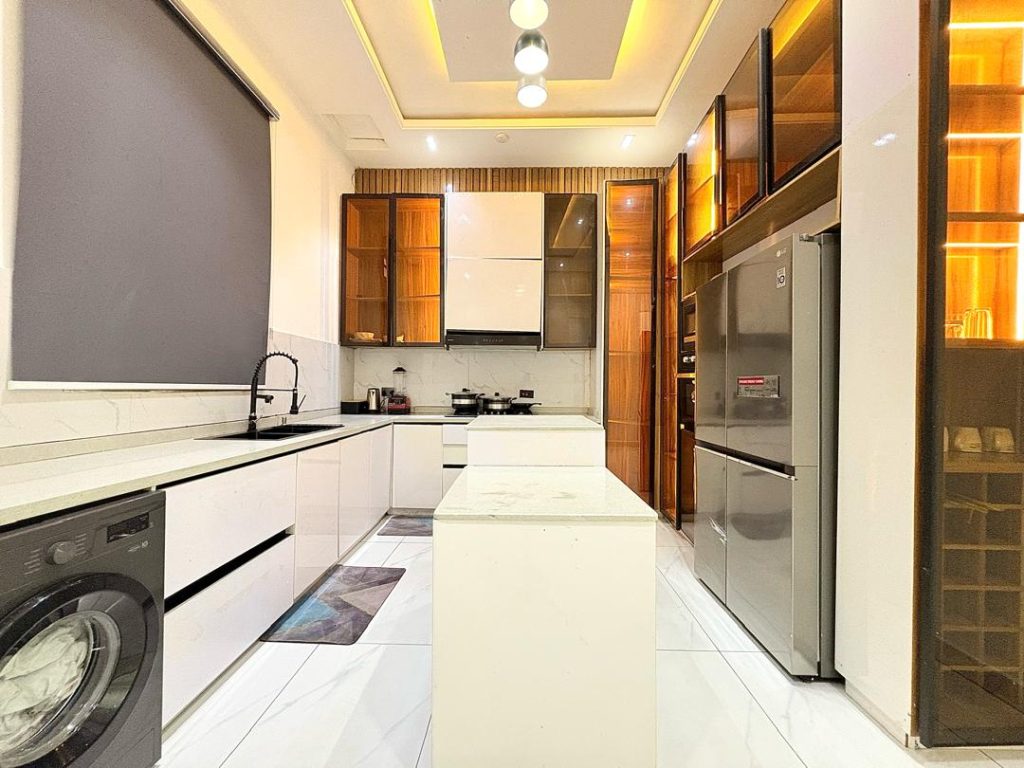
Will you actually cook? Be honest. A kitchen you never use is wasted money, and plenty of December trips involve eating out every single night.
Who do you want solving problems? If the answer is a front desk rather than yourself, that points to a hotel or a serviced apartment. If you are comfortable managing a property for a fortnight, a short-let opens up and usually saves you money.
Whatever you book, do these
The December rules are the same across all three.
Book now rather than in late November. What remains at the end is the expensive and the mediocre. Diaspora visitors made up the bulk of last season’s spending and they book early.
Confirm the power arrangement in writing. Ask whether fuel is included, what the schedule is, and what happens if it fails on a public holiday. Ask a hotel too.
Read the cancellation policy on the specific listing. Not the general one. December is when the strictest terms appear, because operators are protecting dates they cannot refill. Our guide to cancellation policies covers what each tier actually means.
Check what is not in the headline price. Cleaning fees, service charges, caution fees and whether breakfast is included. The comparison between a hotel and an apartment is meaningless until you are comparing the real totals.
Pay through the platform. Refund protections only apply to bookings that exist on the platform.
One last thing. If a price looks dramatically better than everything comparable for the same dates, that is information rather than luck. In the busiest month of the Nigerian calendar, nobody is quietly underpricing a good property.
Sources
The December 2025 backlash and quoted examples: Vanguard, 6 December 2025.
Hotel and short-let bookings and revenue: MO Africa Company Limited, reported by Tribune Online, 9 January 2025.
Trip budgets and group accommodation costs: Tribune Online, 29 July 2026.
Nightly rates by area and December uplift: Nairametrics, 5 May 2026.

Pingback: How to Tell a Real Short-Let From a Scam | LibraX
Pingback: Nigerian Hospitality in 2026: What the Numbers Actually Show | LibraX