
How to Tell a Real Short-Let From a Scam
A diaspora family lost 1.3 million naira to an Ikoyi apartment that did not exist. Here is how the scam works, which checks actually protect you, and why the video tour is not one of them.
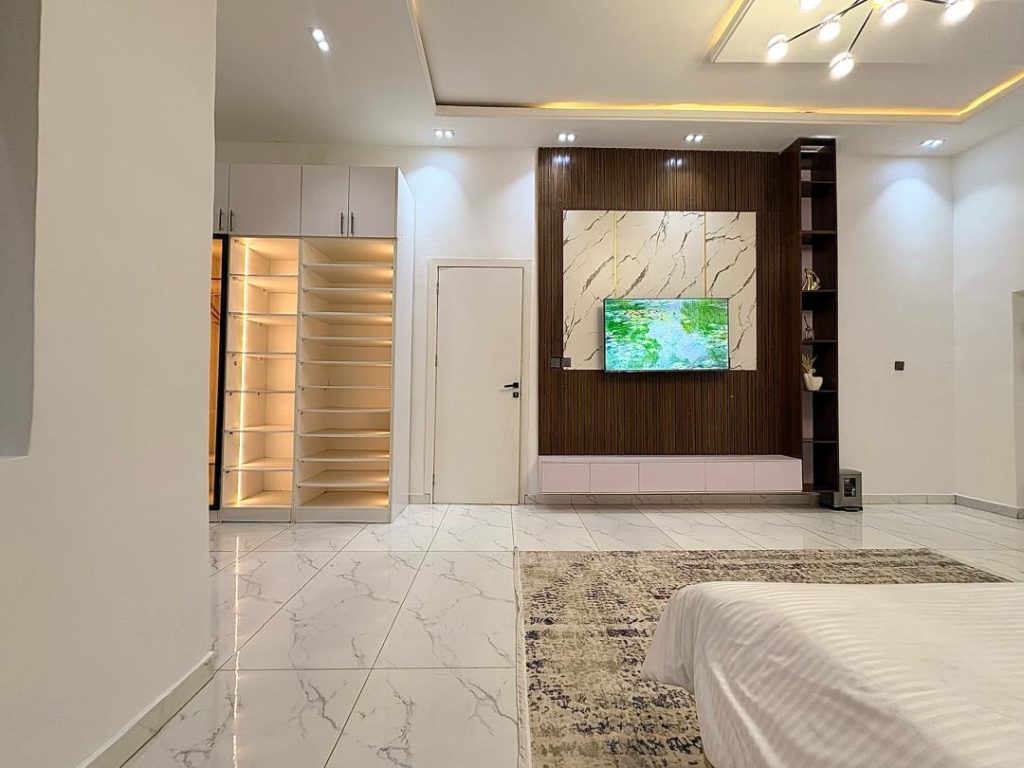
How to Tell a Real Short-Let From a Scam
In October last year, a family flew in from the United Kingdom for Detty December. They had found a luxury apartment in Ikoyi on Instagram, the page was full of photographs of smart shortlets across Ikoyi and Lekki, and they transferred ₦1.3 million to the agent.
The agent deactivated the account immediately after the transfer. The apartment did not exist. The family arrived in Lagos with nowhere to stay and a police report to file.
That was almost exactly a year ago, at this point in the calendar. The season is the same, the demand is the same, and the people running it are still there. So here is how the scam actually works, which checks genuinely protect you, and which widely repeated advice does not.
How the scam actually works
The mechanics are consistent enough to recognise.
It usually starts on social media. Instagram and WhatsApp rather than a booking platform, because an account is free and disposable and there is nobody to answer to.
The photographs are real. This is what fools people. The images are genuine pictures of genuine apartments, lifted from legitimate listings or from other platforms entirely. Nothing about the photos will look wrong, because nothing about them is wrong. They are simply not the scammer’s property.
Listings get cloned outright. A real property on a real platform, copied wholesale onto a fake page at a slightly better price.
The documents look convincing. Fake lease agreements and ownership papers are trivial to produce and almost impossible to check from abroad.
They will absolutely get on a video call. This is the part that catches careful people, and it deserves its own section below.
Payment is by transfer to a personal account. Always. This is the one step that cannot be worked around, because the entire point is to receive money that cannot be reversed.
Then the account disappears. Usually within hours.
The advice that does not protect you
“Ask for a video tour” is the most commonly repeated safety tip for booking in Nigeria, and on its own it is close to useless.
Scammers do video tours. They do WhatsApp calls, they answer questions patiently, they send extra photos on request. Reporting on these cases lists video tours and WhatsApp conversations as tactics used to build trust, not as evidence of legitimacy. A person walking through an apartment on video has not demonstrated that they own it, control it, or will ever give you the keys.
The same goes for a responsive, friendly agent. Responsiveness before payment is not a signal. It is sales.
What these checks test is whether a property exists. What you actually need to test is whether the person asking for your money has any claim to it, and whether you can get the money back if they do not.
The checks that do work
Run the price test first. In December, nobody is quietly underpricing a good apartment in Ikoyi. Demand exceeds supply by a wide margin and every honest operator knows what their nights are worth. A price meaningfully below everything comparable for the same dates is not a bargain, it is the bait. This is the single most reliable early signal.
Reverse image search the photographs. Save a couple of the images and run them through Google Lens or a reverse image search. If the same apartment appears under a different name, a different agent, or on a listing platform you were not shown, you have your answer in about ninety seconds.
Check whether the agent is registered. Many shortlet agents in Lagos operate with no registration at all. Stakeholders have been pressing the Lagos State Real Estate Regulatory Authority to monitor short-term rental agents more closely for exactly this reason. An agent who cannot or will not tell you what entity they trade as is telling you something.
Then apply the test that settles it.
The payment method is the whole game
Everything above is useful. None of it is decisive. This is.
When you transfer money to a personal account, you have no recourse. The transaction is complete, it is irreversible, and your only remedy is a police report filed in a country you may not be in. That is the entire business model. The fake listing, the photographs, the video call, the fake lease are all just scaffolding to get you to make that one transfer.
So the question that matters is not “does this apartment exist” but “what happens to my money between now and check-in”.
On LibraX, booking payments are held in escrow rather than passed straight to the host. For a short stay of 1 to 29 nights, you pay in full at booking, LibraX holds the funds, and the money is released to the host 24 hours after check-in, and only if no major issue has been reported. Longer stays release in monthly instalments rather than in one lump. Payments run through Paystack.
Read that 24 hour window again, because it is the part that actually protects you. You arrive, you get inside, you look around. If the apartment is not what was advertised, or is not there at all, the host has not been paid yet and you have a window in which to say so.
The caution fee works the same way. It sits in a dedicated escrow sub-account managed by Paystack, and if the host reports no damage it is automatically refunded within 24 to 48 hours of checkout.
No escrow, no protection. That is the whole of it, and it applies whichever platform you use.
What verification actually covers
It is worth being precise here, because “verified” is a word platforms use loosely.
Guests are verified before their first booking. LibraX uses Smile ID: a government-issued ID upload plus a live face scan, taking around two minutes. LibraX receives only the result and does not store the ID document image itself. That matters to hosts, who are handing keys to a stranger.
Hosts are verified before they can list. Identity, background and contact checks, and depending on the listing, a government ID, proof of ownership or authorised management rights, verified bank details for payouts, and address verification such as a recent utility bill. The ownership question is the one that kills the Instagram scam, because the scammer has no claim to produce.
Properties are audited. LibraX operates what it calls a Zero-Ghost-Listing policy, under which every property is physically audited and verified by a field agent, or verified through high-definition virtual inspection.
One thing to know going in: LibraX does not permit physical inspection before payment. That is a real constraint and worth stating plainly. The verification and the escrow hold are what stand in its place, which is why the 24 hour window after check-in matters as much as it does.
No system removes risk entirely. What a platform can do is make sure somebody is accountable, that the property was seen by someone before you paid, and that your money is recoverable if the thing you booked is not the thing you got.
If something is wrong when you arrive
Speed matters, because the protections are time-bound.
Report it immediately, before the 24 hours elapse. This is the window in which the funds are still held.
Photograph everything. Wide shots of each room before you unpack, and close-ups of anything that differs from the listing. This is the evidence any review will rest on.
Use the in-app tools rather than only messaging the host. There is a Report Listing function, and a dedicated safety feature for emergencies if you feel unsafe.
Know how disputes run. Direct discussion with the host first, then LibraX mediation, then independent review of the evidence, and formal arbitration if it goes that far. On damage claims, a host has 72 hours after checkout to submit photo or video evidence and repair estimates, and you are given the chance to respond before any binding decision.
The short version
If you remember nothing else: a price that is too good in December is the bait, a video tour proves nothing, and the only question that truly matters is whether your money sits in escrow or lands in someone’s personal account.
That family in Ikoyi did not lose ₦1.3 million because they failed to spot a bad photograph. They lost it because they transferred money to an account with nothing standing behind it.
If you are still working out what to book for December, our guide to hotels, serviced apartments and short-lets covers the trade-offs, and booking a December stay in Lagos covers the timing.
Sources
The Ikoyi case and the tactics described: PropertyAccess, 28 October 2025, reporting on a case originally covered by Vanguard.
Verification, escrow, caution fee and dispute procedures: the LibraX Guest Verification Policy and Escrow and Payout Policy.


Pingback: How to Vet a Guest Booking | LibraX